|
After a full year of work and many hours spent improving upon and iterating our system, we have finally produced an aquaponics system that actually nurtures both fish and plants! We've grown lettuce, basil, and spinach that have all provided a comfortable living environment for nine goldfish. We take pride in the ultimate success of our project, and we hope to continue improving the system next year. We'll post something soon about the next steps for the Aquaponics Project here at St. John's. Thank you for reading. 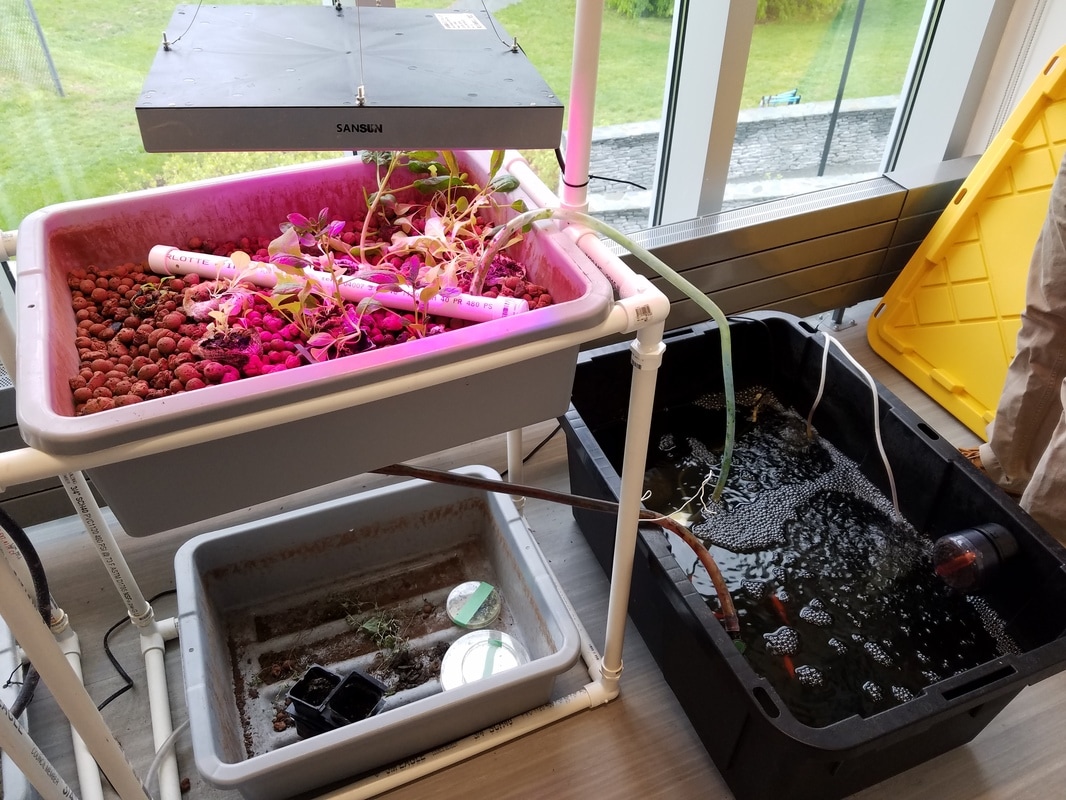 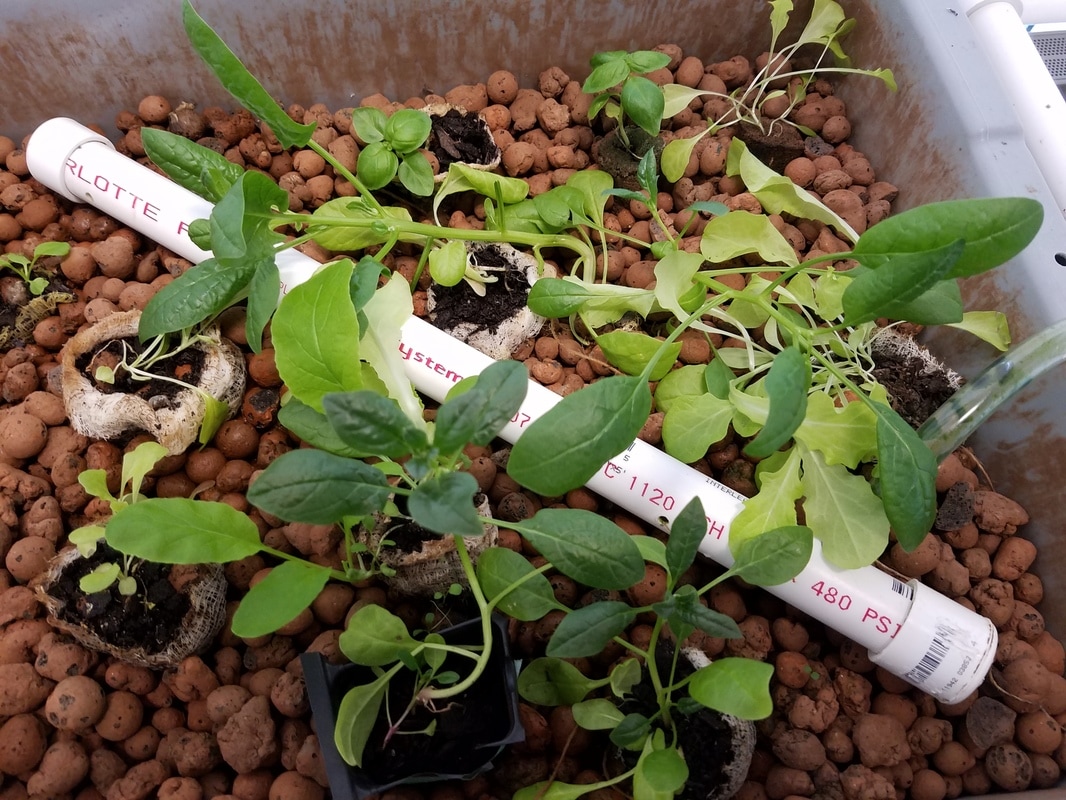 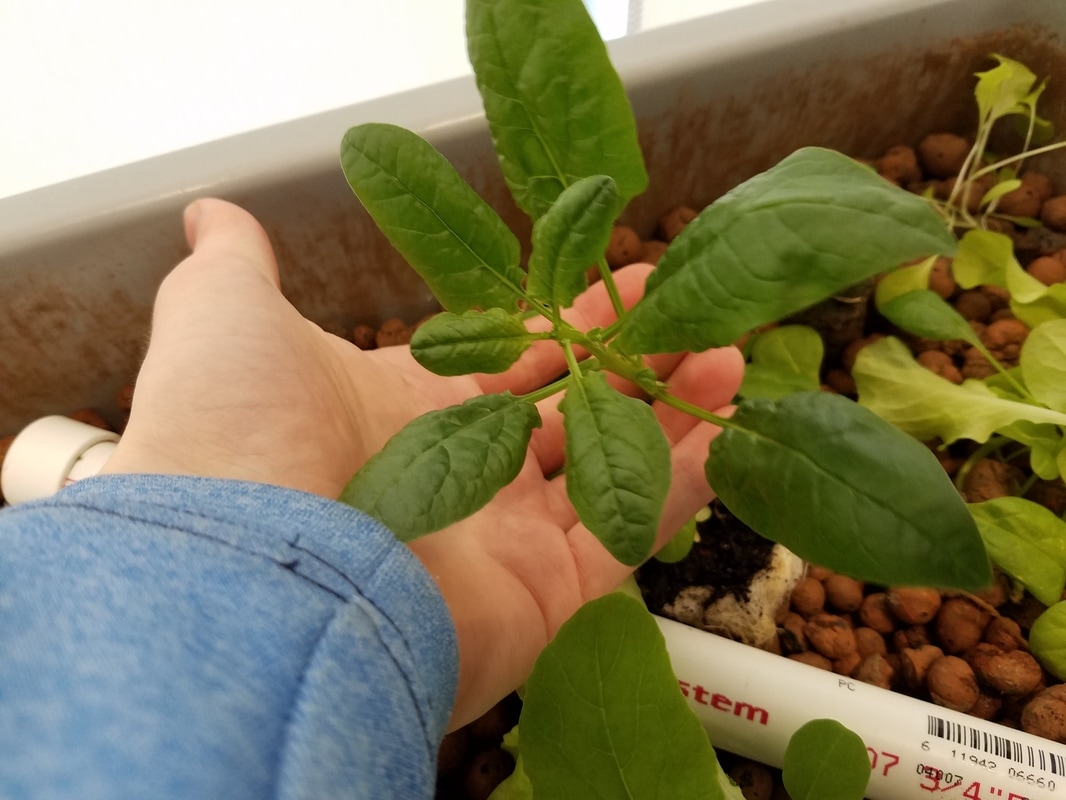 - Mattheus I wanted to provide a summary of the steps we took over the course of a few weeks in March to provide insight into our experimental procedure. Through changing specific variables each week and adjusting levels of different apparatuses, we were able to better understand what goes into the design of an efficient aquaponics system. 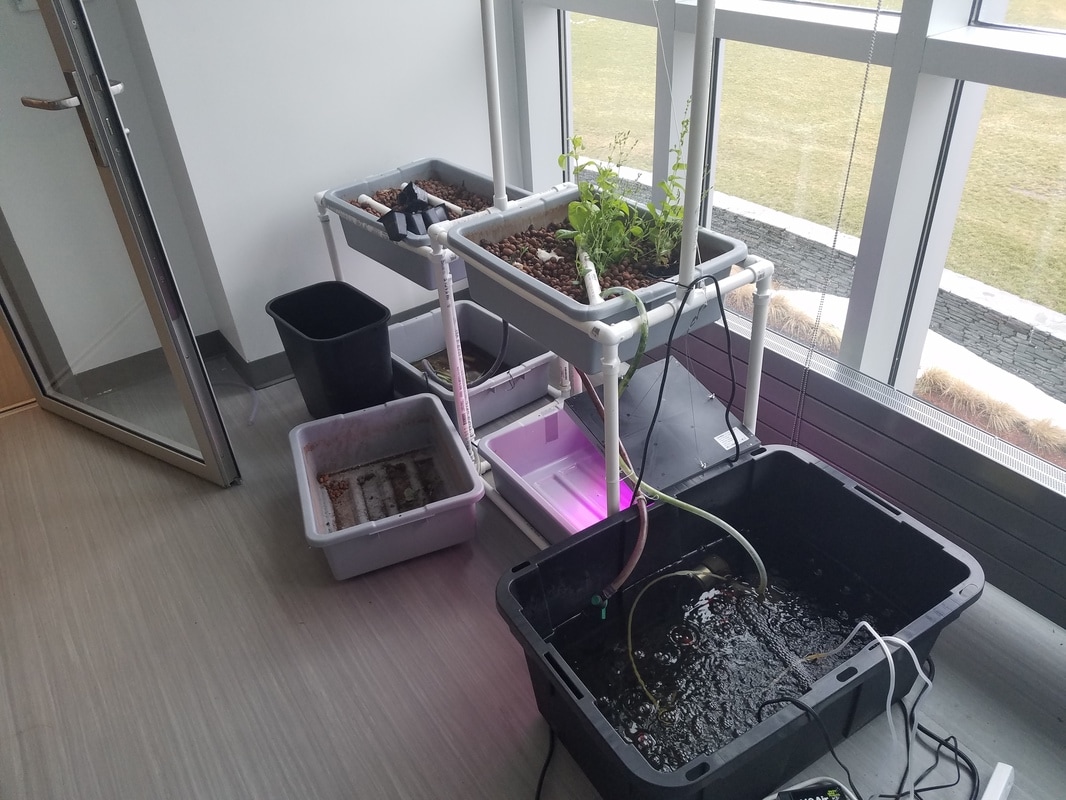 3/1/17:
3/8/17:
3/13/17
3/20/17
- Mattheus We made a step forward by finally putting fish into the system! Beforehand, we put gallons of water into a huge tank and let it sit there for a week or so with a chemical formula to dechlorinate the water. The feeder goldfish came in a plastic bag. We put the bag into the water to allow them to adapt the water temperature. After 15 minutes, we released the fish into the basin and put the bubble makers in to provide sufficient oxygen for the fish (and apparently that is their favorite spot right now). We also bought an autonomous fish feeder. It rotates every 12 hours and drops food into the tank twice daily. However, we did not check the output opening when we first put the feeder in, and it was opened to maximum, so a lot of the food was uneaten.
So far, we’ve only lost two fish. We reduced the output of the feeder by one half. The plants require fish waste as fertilizer to grow; however, the fish waste tends to stay on the bottom of the tank and not go into the pump. We have to stir the water manually at this moment, and we are trying to find an alternative solution to this problem. Photos to come... - Bill In the fall of 2015 and 2016, our group had the opportunity to to visit Greentown Labs in Somerville, Massachusetts (I believe there's a page on this website about the start-up incubator) and hear from the sharp minds behind Grove, a start-up dedicated to integrating "smart" aquaponics gardens into people's homes. In lieu of a post about our own system, we decided to share a bit about this company that gave us insight and inspiration into how to approach the construction of an aquaponics system. 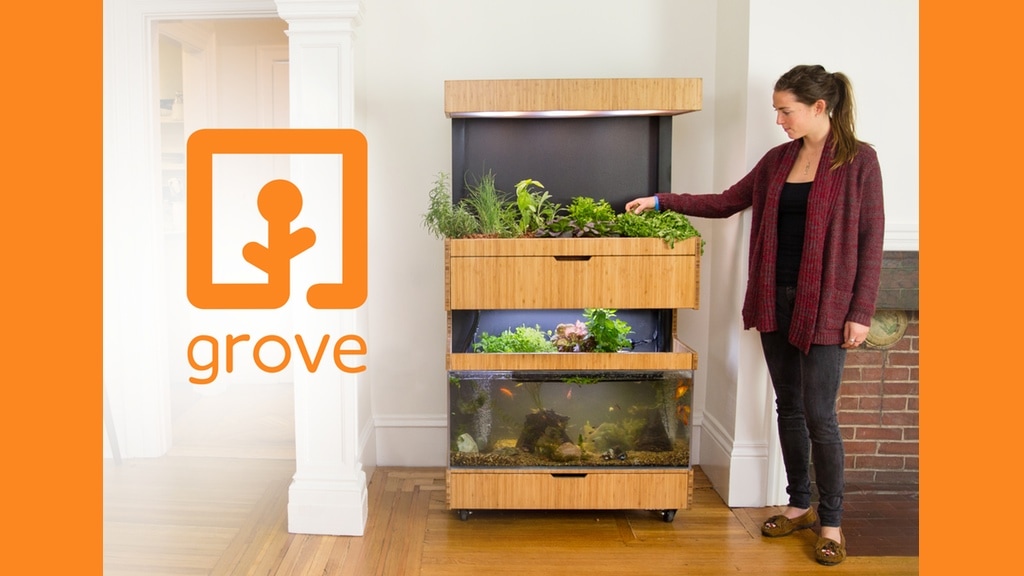 Source: https://www.kickstarter.com/projects/grove-ecosystem/grove-ecosystem-grow-fresh-food-in-your-home Grove Ecosystem intends to change the future of food industry by enabling users to cultivate fruits and vegetables inside their homes. As an aquaponic system, it integrates three primary partitions: the lighting, the grow area, and the fish tank. By the close cooperation of these three, Grove Ecosystem grows crops self-sufficiently (hence the name: Grove Ecosystem). Nonetheless, the aquaponic system illustrates how scientists have come up with the idea, and how the system incorporates the use of sensors and a particular mobile device application to yield maximal growth and its potential impact on our lifestyles. 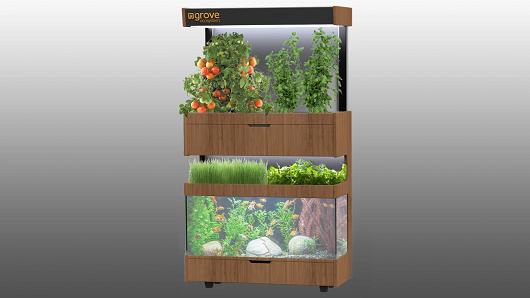 Source: http://www.cnbc.com/2015/11/04/tank-to-table-start-up-bets-on-fish-poop-to-grow-dinner.html The Grove Ecosystem yields freshly grown plants to users as its intended functionality; and enables many to grow and eat organic, sustainable, and hyperlocal food. In the process of familiarizing with the system, the user learns how to grow crops: how much and what type of fish produces a sufficient amount of useful bacteria for the plants, how much lighting the plants need to flourish, and what temperature and humidity the plants need. The educational value of this innovation grants many the opportunity to regain their forgotten knowledge from biology class.
Moreover, the system embodies both an indoor farm and a fish tank and incorporates the benefits of both, ultimately complementing each other for an optimized production. Nevertheless, setting such innovation in one’s apartment will not only allow the user to gain valuable knowledge but also add exquisite liveliness to their home. - Sparrow On January 30th, we tasted some small pieces of the lettuce we plant. Though they (especially the leaves on the top of the plants) tasted a little bit bitter, they tasted very much like the best lettuce you can get in a market! 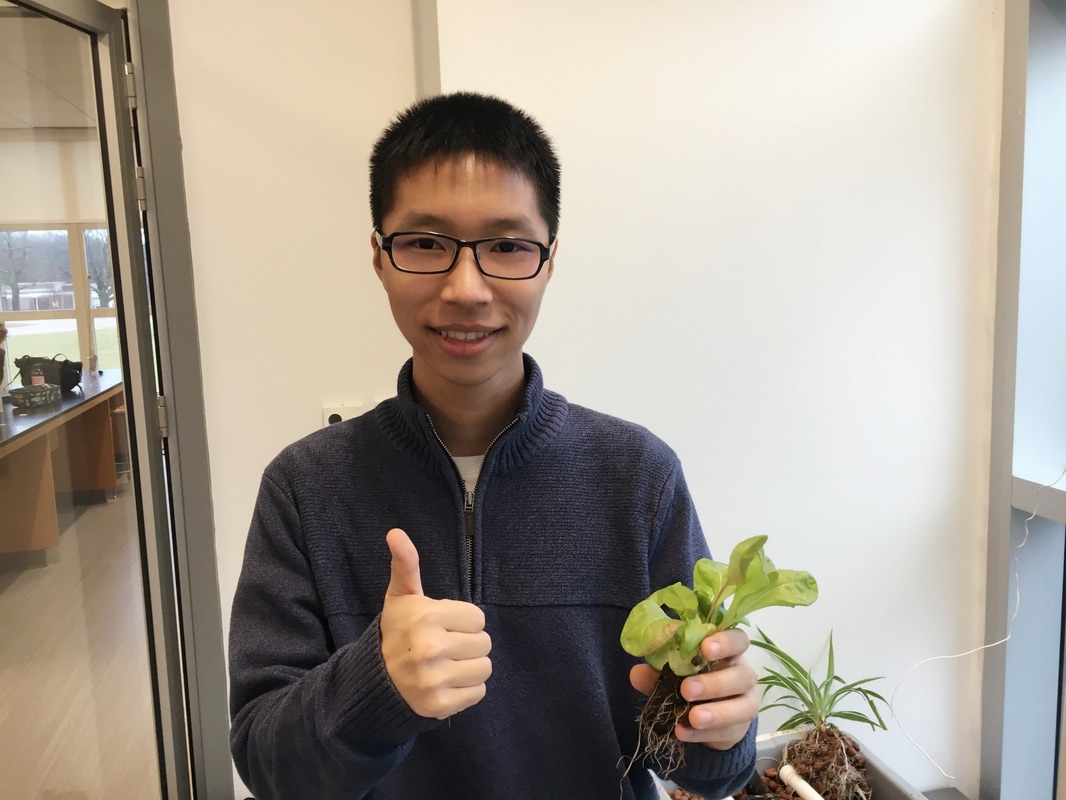 - Robby
I was in a shabby van, bouncing up and down on the narrow path like a dragon crawling through the thick green forest. We stopped at the front of a rusty wire netting door. The door closed and we were captured in a big cage. In 2016, I went on a service trip in Jamaica to Mustard Seed Community, a residential community for kids with severe illnesses and disabilities. I was shocked when I first saw those children who lived in concrete houses on muddy roads. I had never seen anyone with severe disabilities. Most of them were not able to talk, more than a half had twisted bodies and can only mobilize by wheelchairs. Immediately, I was surrounded by them. Feeling scared, I thought to myself how impossible it would be to hang out with them. In the following week, our group gradually built so in-depth relationships with them that most of the children cried when we were leaving During those unforgettable days in Jamaica, I developed a sense of responsibility to improve the living conditions for those children. Luckily, Mustard Seed provided a chance for me to fulfill. It developed its own agricultural system to be self-sufficient on food supply which included an aquaponics system, a symbiotic environment for fish and vegetables. However, it struggled with technical issues, such as having problems to deal with an excess number of bugs without presticide (which will kill the fish). As a key member in the school science club, I decided to bring these issues to the group building our own aquaponics system under a low budget to simulate the growing process and yield solutions for Mustard Seed. Currently, we are a four-member group with support from the science teachers and Mustard Seed staff. After dealing with complex issues, our system recently made its first successful run. Having a sense of responsibility in mind, we try to convert formulas and knowledge into something tangible that will produce life-changing impacts for others, like the community at Mustard Seed. Robby Huang 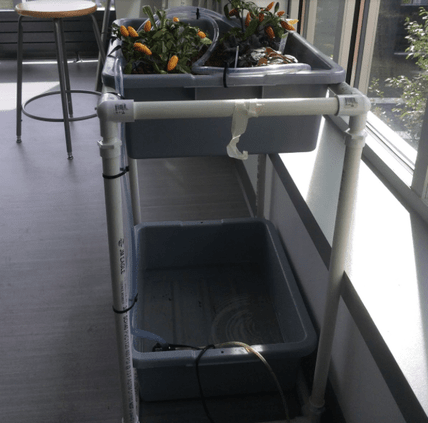 Beginning in April of 2016, we developed Design #1 of the aquaponics system using the available resources in the school’s mini-lab. Our first iteration uses coiled ¼ inch tubing with 9 drilled holes to water the plants. While the system was hastily constructed, it gave our group insight into possible issues associated with aquaponics including water flow rates, crowding of plants, flooding, leakage, as well as information about the design process in general. 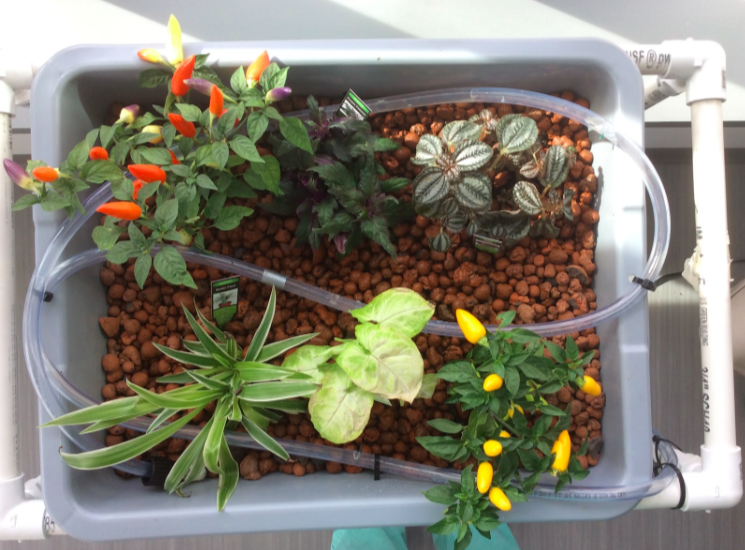 The bin containing the plants sits 75 cm above the water bin below and contains absorbent clay pebbles as a substitute for soil. A pump transfers water to the upper bin. We noticed that the drilled holes in the piping were constantly getting clogged and thus failed to deliver a sufficient water supply to the plants. Additionally, the water flowing from the top bin to the bottom one via a hole in the top bin splashed water onto the floor which greatly decreased the amount of water in the system.
- Mattheus |
AuthorRobby Huang Archives
October 2017
Categories |
 RSS Feed